Price level 103.6
Connecticut: registered contractors and valid contracts
Home improvement contractors must register with the state, and a contract that skips the legal checklist cannot be enforced against you.
By RenovaOak Editorial Team Updated 7 min read
- Price level
- 103.6 (U.S. = 100)
- Contractor license
- State registration
- Contract rules
- Written, 3-day cancel
In short
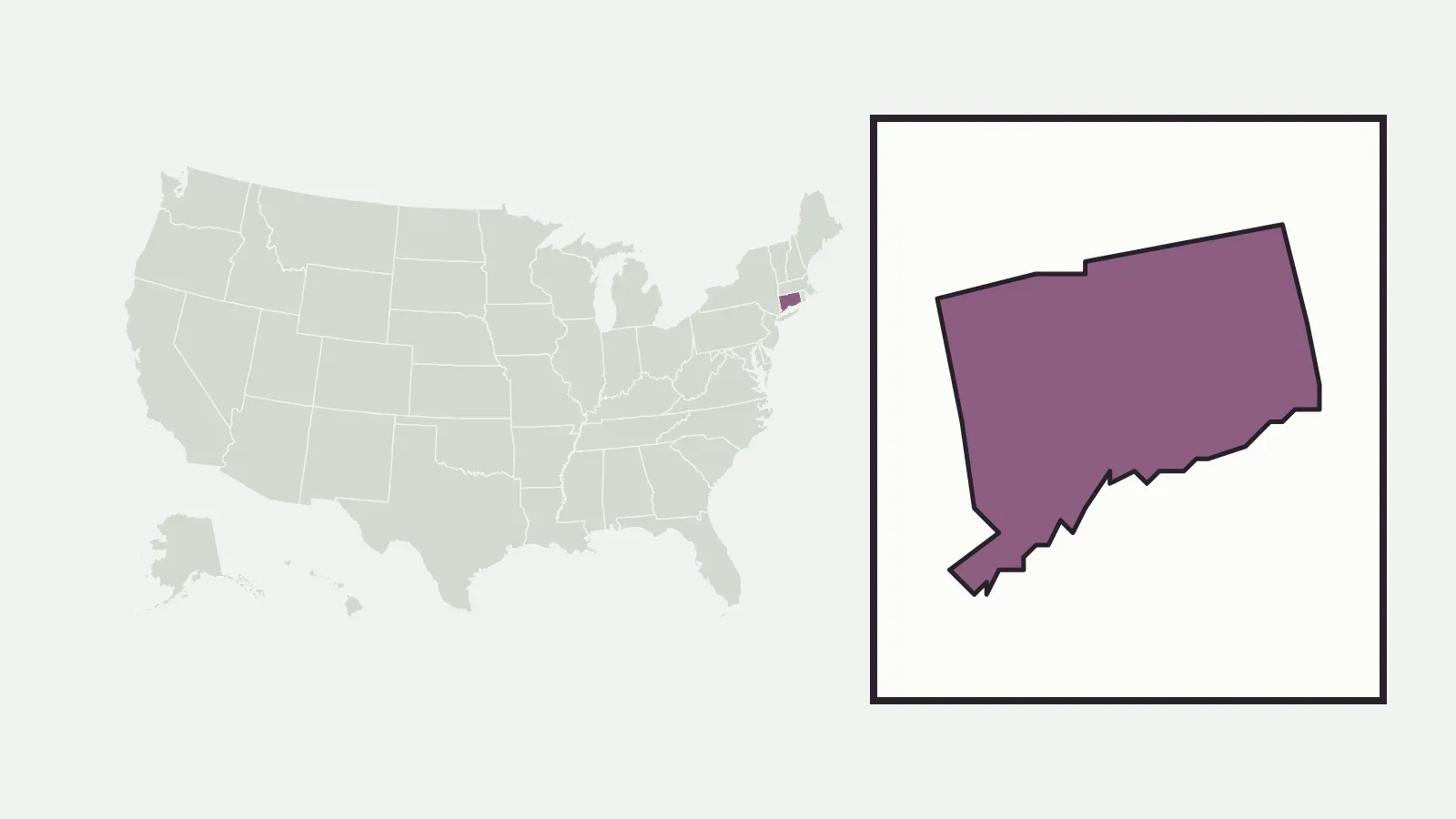
Connecticut's household price level is 103.6 (U.S. = 100), the higher tier, which is not a remodeling price. Anyone doing home improvement work must hold a registration from the Department of Consumer Protection, and a contract is not valid against you unless it is written, signed, carries the registration number and states your cancel rights and the start and end dates. DCP says you can cancel within three days of signing. The 2022 Connecticut State Building Code applies statewide.
Connecticut at a glance
What 103.6 measures
BEA's 2024 regional price parity for Connecticut is 103.6, where 100 stands for the nation, which lands the state in the higher tier (98 to 104.9). It prices a household's basket of goods and services with rent included. It does not price carpentry, tile or wiring, so treat it as context rather than a forecast for your bid.
Your own evidence beats it. Gather three written bids for one scope and run them through the bid comparison tool. Pay for carpenters, electricians and plumbers in your area is published at data.bls.gov/oes.
Registration for home improvement work
Connecticut General Statutes chapter 400 requires a contractor to hold a certificate of registration from the Department of Consumer Protection (DCP) before offering or doing home improvement. The law defines home improvement as repair, remodeling, alteration or addition on a private residence, and it applies once the total price of the agreed work exceeds $200. A person who holds another professional or occupational license for work within that license is exempt, and so is someone whose total home improvement contracts with all customers stay at or below $1,000 in any twelve consecutive months.
- Check the name or business on the state's eLicense lookup. DCP also advises asking for proof of general liability insurance of at least $20,000 and confirming it with the insurer.
- Offering home improvement without a current certificate is a class B misdemeanor, DCP can fine up to $1,500 per violation, and a violation counts as an unfair trade practice.
- A contractor may not start until the required permits are in hand.
- The Home Improvement Guaranty Fund paid about $3 million to eligible consumers in 2025, DCP reports.
The contractor guide covers the questions that go beyond registration.
What makes a contract valid
Under section 20-429, a home improvement contract cannot be enforced against the owner unless it meets the checklist below.
| Item | What the statute asks for |
|---|---|
| Form | In writing and signed by owner and contractor, holding the entire agreement and the date |
| Contractor | Name, address and registration number; made by a registered contractor or salesperson |
| Dates | A starting date and a completion date |
| Notice | Your cancellation rights under chapter 740 |
| Changes | Every change in writing, signed by both parties |
The contractor must hand you a completed copy at signing, at no charge. DCP's May 2026 advisory says you can cancel within three days of signing, that Saturday counts as a business day, that no work should begin in that window, and that only an emergency requiring immediate work justifies waiving the right. Section 20-429 sets no deposit limit, but a separate provision requires a refund within ten days of a written request when little or no work has been done and more than thirty days have passed since the start date.
Permits and code
Connecticut applies one State Building Code statewide. The 2022 edition applies to permit applications filed from October 1, 2022, and is based on the ICC's 2021 codes; the ICC sells the residential volume as the 2021 International Residential Code portion of the 2022 Connecticut State Building Code. The state's page lists no newer edition as of November 2026.
Your local building official issues the permit and decides what an interior remodel needs. The permits guide lists the usual triggers.
Lead-safe work in older homes
Connecticut follows the federal lead-safe rule, run by EPA. You pay someone to disturb paint in a home that predates 1978? Then the firm needs EPA certification. A patch of six square feet or less per room indoors is excluded, but windows and demolition of painted surfaces are covered at any size. Our lead and asbestos page goes further.
Where to check and complain
- Department of Consumer Protection: complaints by email at [email protected] or at ct.gov/dcp/complaint.
- DCP's eLicense lookup: confirm a contractor's registration before you sign.
Common questions
Does Connecticut require home improvement contractors to register?
Yes. The Department of Consumer Protection issues the certificate, and doing home improvement without a current one is illegal.
What happens if my Connecticut remodeling contract is not in writing?
Under CGS 20-429 a home improvement contract is not valid or enforceable against the owner unless it is written, signed and holds the listed items.
How long can I cancel a home improvement contract in Connecticut?
DCP says three days from signing, counting Saturday as a business day, with no work during that period unless you sign an emergency waiver.
Which building code applies to a Connecticut remodel?
The 2022 Connecticut State Building Code applies to permit applications filed since October 1, 2022. Your local building official confirms what your project needs.
Sources
- Connecticut General Statutes, chapter 400: Home improvement contractors
- CT DCP news release, May 12, 2026: remodeling projects
- CT Department of Administrative Services: Connecticut State Building Code
- ICC: 2021 IRC portion of the 2022 Connecticut State Building Code
- EPA: Renovation, Repair and Painting Program, contractors
- FRED: Regional price parity, all items, Connecticut (BEA)
Checked November 19, 2026. We read chapter 400 as published on the General Assembly site, DCP's May 2026 release and the code page above. We could not open chapter 740 (the cancellation statute) or DCP's own registration page, so the three-day period comes from DCP's release. Laws and agency pages change; confirm with the agency before you act. A second check on November 20, 2026 read the main official pages again; it did not re-confirm the 3-day cancel period; the $1,000 exemption is in 20-419(4)(B).
Keep reading
-

Planning guide
Choosing a contractor
Scam signs, license and insurance checks, comparable written bids, contract basics and what to do in a dispute.
-

Planning guide
Change orders and payment schedules
Put every change in writing, understand allowances and contingency, and pay in a way that protects you.
-
Planning guide
Lead paint and asbestos in older homes
EPA's lead-safe rule, EPA's asbestos advice, and the testing and contract lines to settle before you open a wall.