Price level 96.3
Georgia: contractor licenses, cancellation rights and code for interior remodels
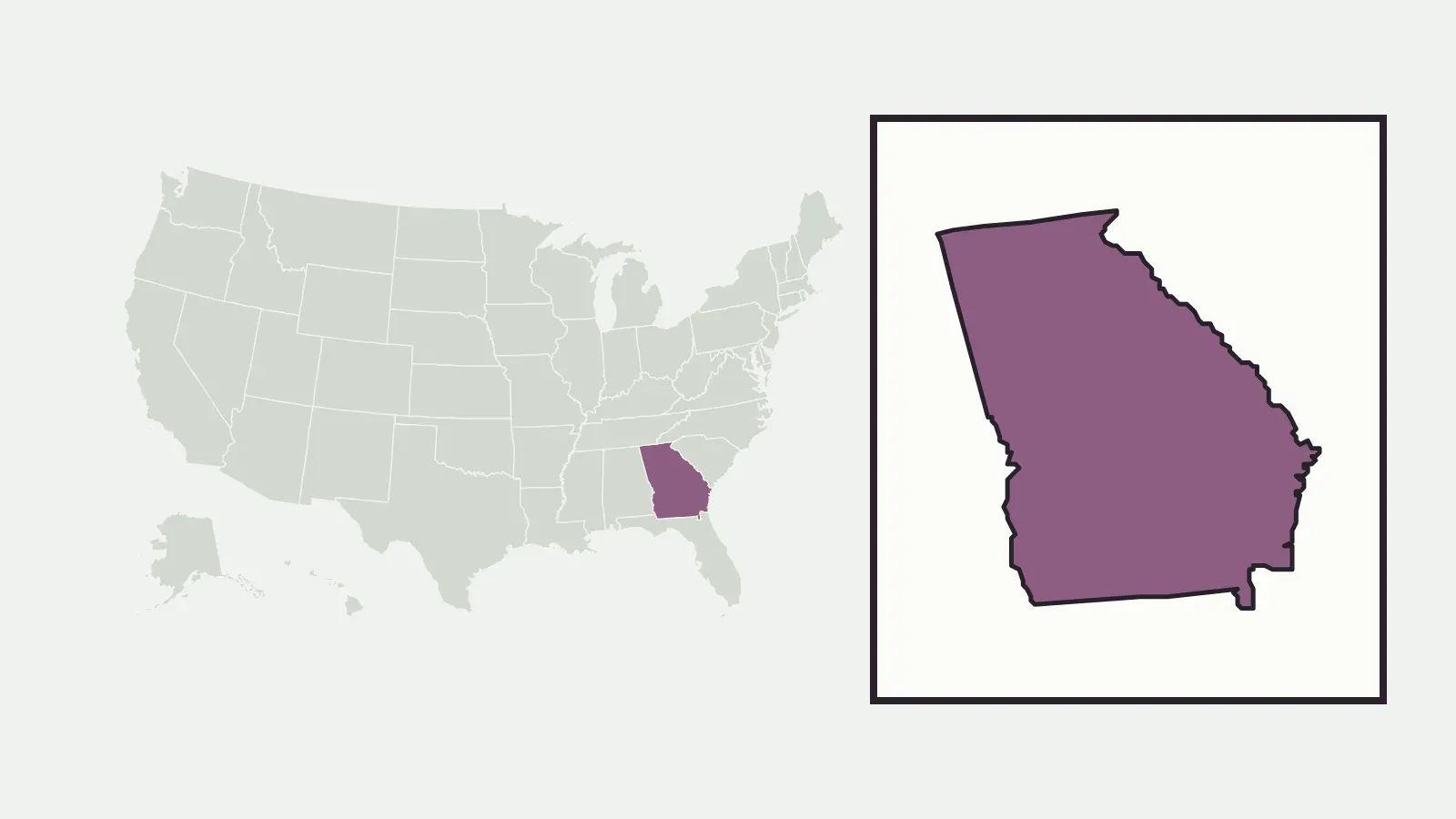
Georgia licenses residential contractors, lets unlicensed people do non-structural repairs only with a written warning, and runs its own lead-safe program.
By RenovaOak Editorial Team Updated 6 min read
- Price level
- 96.3 (U.S. = 100)
- Contractor license
- Residential state license
- Contract rules
- 3-day cancel, $25+ at home
In short
Georgia's price level is 96.3, in the lower band, and it measures household spending rather than remodeling bids. A state board licenses residential and general contractors; the statute text reviewed has no dollar threshold, and non-structural repair is allowed without a license only if the worker discloses that in writing. Sales signed at your home for $25 or more carry a three-day right to cancel. The 2024 IRC became a mandatory state code on January 1, 2026, and Georgia runs its own lead-safe renovation program.
Georgia at a glance
What a 96.3 price level means
The Bureau of Economic Analysis compares what households in each state pay for a standard mix of goods and services, rents included, against a national value of 100. Georgia scored 96.3 for 2024, which this site's map calls "lower" (92 to 97.9).
That is a household budget number. It is not a price for tile, drywall or labor, so it cannot tell you what your bathroom will cost. Get three written bids for the same scope and compare them in the quote check. For a wage reality check, open the BLS occupational wage tables at data.bls.gov/oes and look up carpenters, electricians and plumbers for your metro area.
Licensing: residential and general contractors
The State Licensing Board for Residential and General Contractors licenses people who build, alter or remodel buildings for others. A residential-basic contractor handles detached one- and two-family homes and townhouses up to three stories, plus their accessory structures. The state's own contractor page for consumers says to ask to see the license and verify it with the Secretary of State.
If the contractor has no license when one is required, the contract cannot be enforced by the contractor, and no lien or bond claim exists for that work (O.C.G.A. 43-41-17(b)). Plumbing, electrical, conditioned air, low-voltage and utility work have separate licenses under another chapter.
There is one carve-out. Under 43-41-17(g) and the board's Repair Rule (553-8-.01), a person may do repair work for an owner without a residential or general license if all four of these hold:
Written disclosure
The worker tells you in writing that they are not licensed as a residential or general contractor.
No outside supervisor
Nobody other than the worker's employees supervises, manages or oversees any part of the work.
Nothing structural
No effect on life safety or structural integrity, and no adding or removing a load-bearing wall or cutting a structural beam.
Permits pulled
The worker gets any permits and inspections the local authority requires.
Contract, deposit and cancellation
Georgia's Attorney General describes a three-business-day right to cancel for a written contract of $25 or more, for personal or household use, made somewhere other than the seller's regular place of business, such as your home. The seller must explain the right and give you two copies of a Notice of Cancellation. If you never get the form, you may cancel until you do. Emergency home repairs are excluded.
The state's consumer education page adds advice that is not law: keep the down payment to no more than 25% of the price, tie later payments to finished stages, and hold back 10% until the work is satisfactory. A written warranty statute (43-41-7) exists for contracts to build a single-family house above $2,500, so it reads as aimed at new construction, not an interior remodel. Not confirmed: any Georgia statute that caps deposits on remodeling.
The contractor page and the change orders guide show how to write stage payments and extras into the contract.
Building code and permits
The Department of Community Affairs announced new mandatory State Minimum Standard Codes effective January 1, 2026. The list includes the 2024 International Residential Code with Georgia Amendments, the 2024 plumbing, mechanical and fuel gas codes, and Georgia amendments to the 2023 National Electrical Code.
The memo does not say who enforces them. Permits and inspections come from your city or county, so ask which edition it applies and whether it has local amendments on file. The permits page lists the jobs that usually need one. The Repair Rule also expects permits to be pulled when the local authority requires them.
Lead-safe work: Georgia runs the rule
EPA has handed lead-safe renovation oversight in Georgia to the state, one of 15 with that authorization. The Environmental Protection Division's Land Protection Branch enforces the state's lead-based paint rules for renovation that disturbs lead paint in pre-1978 homes and child-occupied facilities. Its Land Branch line is (404) 657-8600.
The federal definition of minor repair is 6 square feet of painted surface or less per room inside, and it excludes window replacement. Georgia's own thresholds were not confirmed, so ask EPD before a paint-disturbing job. More background is on the lead and asbestos page.
Where to verify a license and complain
- Verify a license through the Secretary of State's online license lookup.
- Consumer Protection Division, Georgia Attorney General: (404) 651-8600, or (800) 869-1123 outside metro Atlanta. The consumer.georgia.gov page "Resolve Your Dispute" explains the process.
- Report violations of the federal three-day rule to the Federal Trade Commission; the state page points there.
- Georgia EPD, for lead-safe work questions.
Common questions
Can a handyman remodel my kitchen in Georgia without a license?
Only repair work that does not affect structural integrity, and only if the worker tells you in writing that they are not licensed and any permits are pulled. A remodel with structural changes needs a licensed contractor.
Is there a dollar threshold for needing a Georgia contractor license?
None appears in the statute section or the board's Repair Rule reviewed. Some local pages quote $2,500, so confirm with the board before relying on it.
Which residential code does Georgia use now?
The 2024 International Residential Code with Georgia Amendments became part of the State Minimum Standard Codes on January 1, 2026. Your city or county decides how it enforces them.
Does the federal lead rule apply in Georgia?
Georgia runs its own EPA-authorized program, enforced by the Environmental Protection Division, so state rules and certifications apply instead of the federal certification.
Sources
- Official Code of Georgia 43-41-17: Exceptions and unenforceable contracts (Justia, 2025)
- Georgia Rules 553-8: Definitions, Repair Rule
- FindLaw: O.C.G.A. 43-41-2, residential contractor definitions
- FindLaw: O.C.G.A. 43-41-7, written warranties
- Georgia Attorney General: Canceling a Contract
- Georgia Consumer Education: Choosing and Working with a Contractor
- Georgia DCA: New codes and amendments effective January 1, 2026 (memo)
- Georgia EPD: Lead-Based Paint program
- EPA: Lead Renovation, Repair and Painting Program
- 40 CFR 745.83: Minor repair and maintenance definition
- FRED: Regional price parity, Georgia (GARPPALL)
Checked November 19, 2026. Read: the Georgia Code sections above, the board's Repair Rule, the Attorney General and Consumer Education pages, the DCA memo and the EPD lead page. Not read: sos.ga.gov (the board's own pages did not open), the text of 43-41-9, and EPD's Georgia-specific renovation thresholds. FindLaw and Justia are commercial copies of the code and may lag the official text. A second check on November 20, 2026 read the main official pages again; it did not re-confirm the 3-day in-home cancel right.
Keep reading
-

Planning guide
Choosing a contractor
Scam signs, license and insurance checks, comparable written bids, contract basics and what to do in a dispute.
-
Planning guide
Lead paint and asbestos in older homes
EPA's lead-safe rule, EPA's asbestos advice, and the testing and contract lines to settle before you open a wall.
-

Planning guide
What drives remodel prices
Scope, moved pipes and wires, hidden conditions, allowances and permits, with what to ask each bidder.