Price level 100.0
Remodeling in Nevada: license limits, a deposit cap and local codes
A price level right at the U.S. average, a state license with a dollar limit printed on it, and written-contract rules for single-family remodels.
By RenovaOak Editorial Team Updated 6 min read
- Price level
- 100.0 (U.S. = 100)
- Contractor license
- State license (NSCB)
- Contract rules
- Deposit cap in statute
In short
Nevada's price level is 100.0, the same as the national average and in the higher tier, but it measures household costs and not remodeling. The State Contractors Board licenses contractors, each license carries a monetary limit, and small repair work under $1,000 is exempt. For a remodel of a single-family home you live in, state law (NRS 624.970) requires a written contract and caps the deposit at the lesser of $1,000 or 10 percent. Codes are adopted locally, and EPA runs the lead-safe rule.
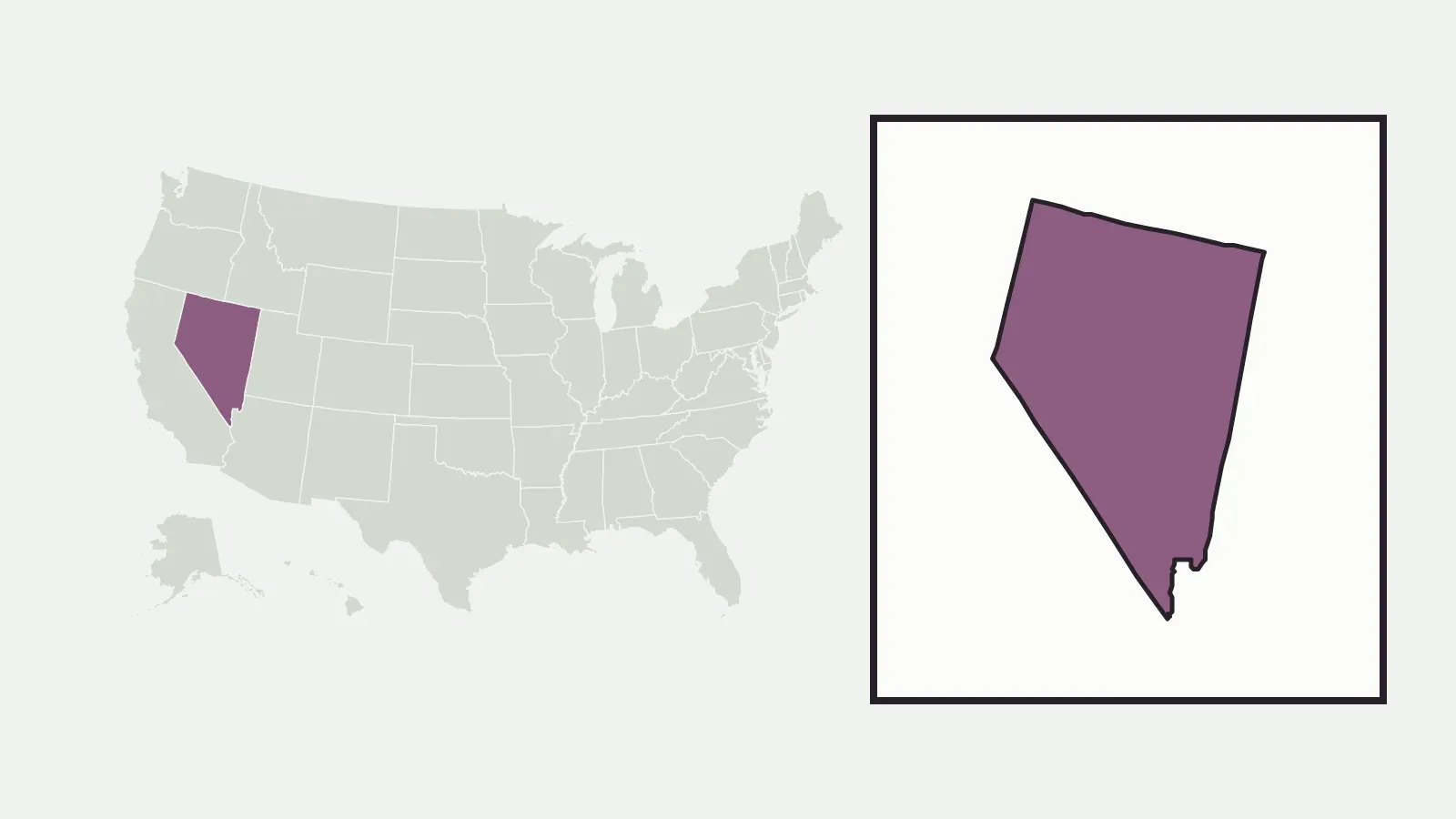
Nevada at a glance
Reading a price level of 100.0
A reading of 100.0 means the Bureau of Economic Analysis found a typical Nevada household's basket of goods and services costing the same as the national average in 2024. Housing is part of that basket, so the figure is not a remodeling price. A bathroom in Las Vegas, Reno or a rural county will be priced by the bids you collect, not by this index.
Ask three local contractors for written bids and compare them in the bid comparison tool. If you want wage context, the BLS OEWS data at data.bls.gov/oes shows carpenters, electricians and plumbers for your metro area.
Who may do the work
Nevada licenses contractors through the State Contractors Board (NSCB). Each license shows a classification, a license number and a monetary limit, all printed on the contractor's pocket card. The Board says contracts written in excess of the limit are invalid, so check the number before you sign. A contract or bid made in violation of the licensing law is deemed void from the start under NRS 624.700, and the Board calls unlicensed contracting a crime.
Some work does not need a license. NRS 624.031 exempts an owner who builds or improves a residential structure on the property for his or her own occupancy; selling or leasing it within a year creates a presumption that it was meant for sale, and the owner has to apply to the Board for the exemption. It also exempts work to repair or maintain property whose value is less than $1,000, labor and materials included. That exemption does not apply to work that needs a building permit, to plumbing, electrical or HVAC work, or to work that is part of a larger project of $500 or more.
- Ask for the contractor's pocket card and write down the classification, license number and monetary limit.
- Look the license up at app.nvcontractorsboard.com and confirm it is in good standing.
- Make sure the contract amount is within the monetary limit and the name matches the license.
- Ask whether the contractor has filed the consumer protection bond the statute mentions, because it changes the deposit rule below.
Homeowners who hired a licensed contractor may be able to claim on the Residential Recovery Fund, but only after other options are used up, and it does not pay for completed work. For general hiring questions see choosing a remodeling contractor.
The contract and payment rules
NRS 624.970 applies to a contract between a residential contractor and an owner who lives in a single-family home, for work on a residential improvement, from October 1, 2023. Solar and pool work are left out. The contract must state in writing the contractor's name, address, license number and license monetary limit, the dates, a description of the work, and the total price with taxes.
| Item | Rule |
|---|---|
| Initial deposit | Not more than $1,000 or 10 percent of the contract price, whichever is less |
| Deposit exception | The cap does not apply if the contractor filed a $100,000 consumer protection bond with the Board or received relief under NRS 624.270 |
| Change orders | Agreed in writing; one is unenforceable against you unless it sets out all scope and price changes |
| Progress payments | A schedule in dollars and cents; payments may not exceed 100 percent of the value of work done |
| Copies and receipts | A legible copy of everything signed, and a signed receipt for money paid |
If a contract does not comply, you may modify it to comply, and the deposit clause is voidable by you. A clause making you waive your rights under the chapter is void. The text I read did not include a cancellation right, so I cannot tell you that one exists. The federal Cooling-Off Rule (16 CFR part 429) may apply to a sale made at your home. The change orders page shows how to track scope and price changes.
Permits and code
Nevada has no statewide residential code that I could confirm. The ICC says codes are adopted locally, after regional committees prepare suggested amendments, while the state adopts codes for state-owned and state-funded buildings. State law does require local adoption of the latest edition of the energy code. Which edition of the International Residential Code your city or county enforces is a question for its building department, as of November 2026.
The contractor must obtain the needed permits under NRS 624.970, but you should still ask who pulls the permit and read it. Permits for interior remodels lists what tends to need one.
Lead-safe work in older homes
Nevada is not an EPA-authorized state, so the federal Renovation, Repair and Painting rule applies. Paid work that disturbs paint in a pre-1978 home needs an EPA-certified firm. Work that disturbs 6 square feet or less per room inside, or 20 square feet or less outside, is excluded unless it involves window replacement or demolition of painted surfaces. EPA treats homeowners working on their own pre-1978 home as generally outside the rule. See lead paint and asbestos in older homes.
Where to check and complain
- License check and complaints: NSCB, licensing and customer service 775-688-1141 (north) or 702-486-1100 (south); investigations 775-688-1150 or 702-486-1160.
- Complaints against a licensed contractor can be filed up to four years after completion, according to the Board.
- Other consumer complaints: Nevada Attorney General, ag.nv.gov.
Common questions
Is there a limit on how much deposit a Nevada contractor can ask for?
For a remodel of a single-family home you occupy, NRS 624.970 caps the initial deposit at the lesser of $1,000 or 10 percent of the contract price, unless the contractor filed a $100,000 consumer protection bond or got relief under NRS 624.270.
What is a monetary limit on a license?
It is the largest contract the license allows. The Board says contracts above it are invalid, so check the limit on the pocket card against your price.
Do I need a license to do my own remodel?
No, if it is a residential structure you are improving for your own occupancy. NRS 624.031 sets a presumption of intent to sell if you sell or lease within a year.
Which residential code does Nevada use?
It depends on your city or county. Nevada adopts codes locally, and your building department can tell you the edition.
Sources
- Nevada State Contractors Board
- NSCB: A consumer overview of contractors and contracts
- Nevada Legislature: NRS chapter 624 (contractors)
- NRS 624.700, unlicensed contracting (Justia)
- Nevada Legislature: NRS chapter 278 (planning and zoning, building codes)
- ICC: Nevada code adoptions
- Nevada Attorney General: consumer complaints
- EPA: Lead Renovation, Repair and Painting Program
- FRED: BEA regional price parity, Nevada (NVRPPALL)
Checked November 19, 2026. Read: the Contractors Board home page and consumer overview, NRS 624.020, 624.031, 624.700 and 624.970 as shown on the Legislature's chapter 624 page and Justia, the headings of NRS chapter 278, the ICC adoption page, the Attorney General's complaint page and EPA's RRP page. Not confirmed: the criminal penalties for unlicensed work (the Board says it is a crime; I did not read the penalty text), any cancellation right for remodeling contracts, the IRC edition any city enforces, and the wording of NRS 278.580 and 278.581. Price level: BEA release 26-10 (February 19, 2026); the next release is due December 10, 2026. A second check on November 20, 2026 read the main official pages again; it did not re-confirm the deposit cap in NRS 624.970.
Keep reading
-

Planning guide
Choosing a contractor
Scam signs, license and insurance checks, comparable written bids, contract basics and what to do in a dispute.
-

Planning guide
Change orders and payment schedules
Put every change in writing, understand allowances and contingency, and pay in a way that protects you.
-

Planning guide
Permits for interior remodels
What usually needs a permit, what does not, a call script for your building department, and the inspection order.