Price level 107.9
New York: contracts first, licenses by locality
The strongest protection is the state's home improvement contract law, while licensing depends on where the house sits.
By RenovaOak Editorial Team Updated 6 min read
- Price level
- 107.9 (U.S. = 100)
- Contractor license
- Local: NYC, 5 counties
- Contract rules
- Written, over $500
In short
New York has detailed home improvement contract rules for any job priced above $500: a signed written contract, a payment schedule that tracks the work, a statement of your right to cancel for three business days, and protection for money paid before completion. The Attorney General says contractors must be licensed in New York City and in Nassau, Suffolk, Westchester, Putnam and Rockland counties. We found no statewide license for remodelers. The Uniform Code was updated on December 31, 2025, and EPA runs the lead-safe rule.
New York at a glance
Reading the 107.9 price level
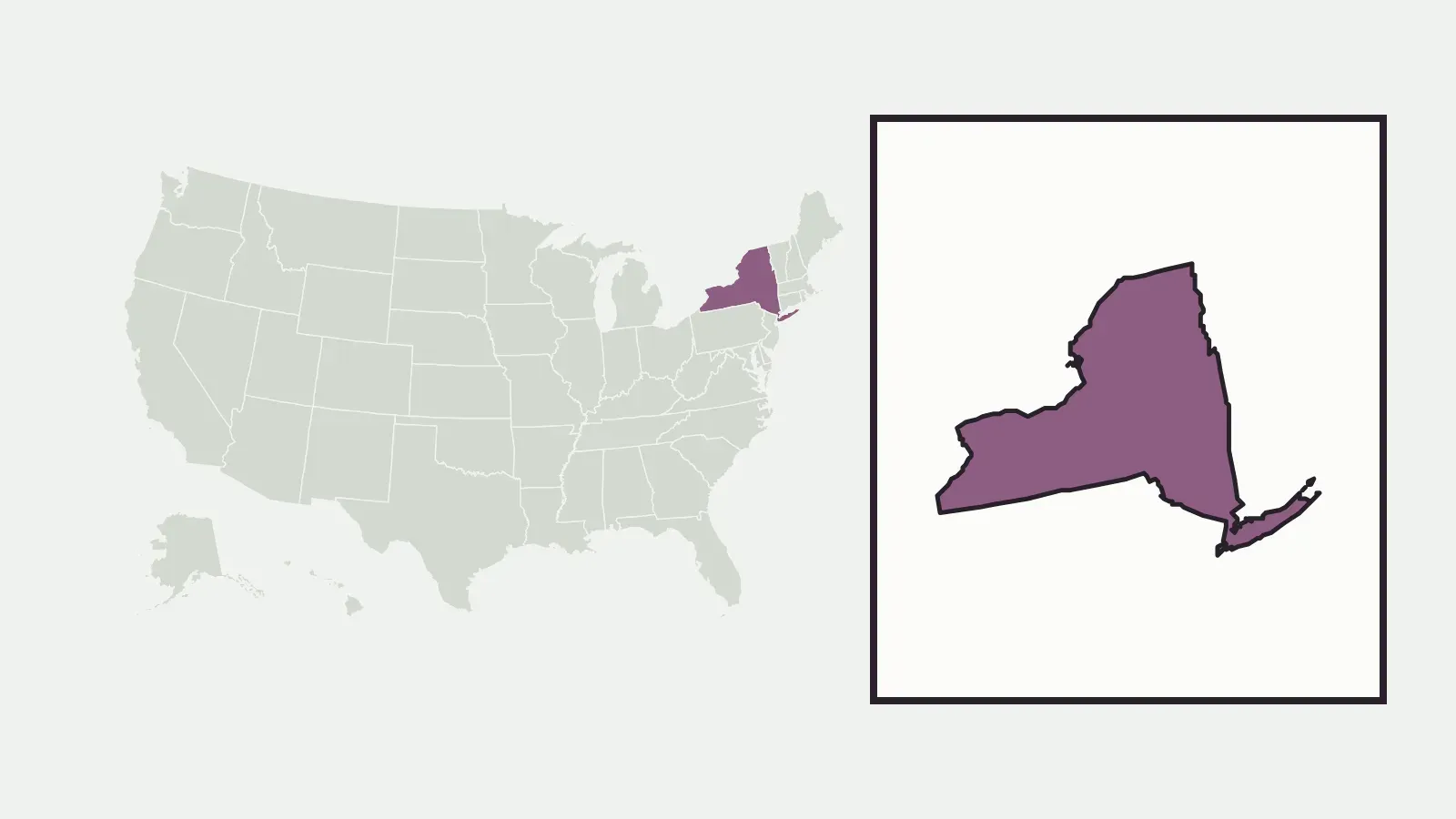
BEA's 2024 regional price parity for New York is 107.9 against a U.S. figure of 100, which lands the state in the highest group on the map. Housing costs, including rent, pull that number up. It describes what households pay for everyday living, so it tells you little about a bid for a bathroom gut.
The better signal is a set of written bids for your own scope, which the quote check tool lays out per square foot. For a wage check on carpenters, electricians and plumbers where you live, search your area at data.bls.gov/oes. If you live in a co-op or condominium, your building's own alteration rules sit on top of everything here, so ask the managing agent before you collect bids.
Licensing depends on the locality
The Attorney General's office states that home improvement contractors must be licensed in New York City and in Suffolk, Nassau, Westchester, Putnam and Rockland counties, and must follow any other local licensing law. In the city, the Department of Consumer and Worker Protection (DCWP) issues the Home Improvement Contractor license, and the requirement reaches construction, repair and remodeling work on residential buildings. The pages we read describe no statewide license for remodelers.
Elsewhere in the state, then, the check is up to you. Ask your town, village or county office whether it licenses contractors, and ask the contractor for a certificate of insurance. Under the contract law, the contractor must also tell you in writing about any property or casualty policy covering the work, including the insurer's phone and address.
The contract law applies to a contractor whose home improvement contracts add up to more than $1,500 in any 12 months. It leaves out decorative goods such as draperies and carpets, loose appliances like stoves and refrigerators, and warranty repairs (GBL 770). Kitchens, baths, basements and floors fall inside it.
What the contract must contain
Once the price passes $500, the agreement must be written in plain English, signed by both sides, and handed to you in a contractor-signed copy before any work begins (GBL 771). The Attorney General's fact sheet lists what it must name.
- The contractor's name, address, phone number and license number if there is one.
- Approximate start and completion dates, plus anything that could shift them.
- The work and the materials, with make or model, and the price.
- A mechanic's lien warning and a notice about how pre-completion payments are protected.
- Any progress payments, as a schedule in dollars and cents tied to finished work.
- A notice that you may cancel until midnight of the third business day after signing, in writing.
The statute sets no dollar cap on a down payment. Instead it ties each progress payment to work done or materials bought, and money paid before completion must go into a New York bank escrow account within five business days or be covered by a bond within ten, according to the Attorney General. Keep the last payment until inspections pass. The change orders page shows how to price a mid-job change before it is built.
Permits and the Uniform Code
The state's 2025 Uniform Code took effect on December 31, 2025, and the 2025 Residential Code of New York State is part of it. The Department of State's notice names no transition period, so permit applicants follow the 2025 edition from that date. Whether your job needs a permit, and which office reviews it, is a local call. The permits guide explains why walls, wiring and plumbing tend to be the triggers.
Lead-safe work in older homes
EPA, not New York, administers the federal lead-safe renovation rule here. Homes built before 1978 are the target: a paid crew that replaces windows, tears out painted surfaces or disturbs over 6 square feet of paint in one room is covered (40 CFR 745.83). Before demolition day, ask whether the firm holds EPA certification, and skim the lead and asbestos guide. New York City may add its own lead rules, which we did not research.
Where to check and complain
File a complaint with the Attorney General online or by phone at 1-800-771-7755. The office can go to court to stop illegal practices and seek compensation for customers. In the city, license questions go to DCWP. Read the contractor-hiring guide for the checks that apply anywhere.
Common questions
Does New York require a state license for a kitchen remodeler?
We found no statewide license. The Attorney General says contractors must be licensed in New York City and in five counties, and other towns may have local rules. Ask your local office.
Can I cancel a New York home improvement contract?
Yes. The contract must tell you that you may cancel in writing until midnight of the third business day after you sign. A narrow exception exists for an emergency that you start and waive by hand.
Is there a limit on the deposit?
The statute does not set a percentage cap. Progress payments must reasonably match the work, and money paid before completion must be escrowed in New York or covered by a bond.
Which residential code applies now?
The 2025 Residential Code of New York State, as part of the Uniform Code that took effect December 31, 2025. Permit applicants follow the 2025 edition from that date.
Sources
- NY Attorney General: Home improvement fact sheet
- NY Attorney General: Hiring a home-improvement contractor
- NY General Business Law section 770: definitions
- NY General Business Law section 771: contract provisions
- NYC DCWP: Home improvement contractor license
- NY Department of State: 2025 Uniform Code adoption notice
- EPA: Lead Renovation, Repair and Painting Program
- 40 CFR 745.83: Definitions, minor repair and maintenance
- FRED: Regional price parity, all items, New York (BEA)
Checked November 19, 2026. We read the pages above. We did not find an official page stating that no statewide contractor license exists, so that line is our reading of the Attorney General's wording. We did not open the NYC lead rules, the text of the Residential Code or any county licensing page. A second check on November 20, 2026 read the main official pages again; the AG fact sheet does not tie the written contract explicitly to $500 and does not say there is no statewide license.
Keep reading
-

Planning guide
Choosing a contractor
Scam signs, license and insurance checks, comparable written bids, contract basics and what to do in a dispute.
-

Planning guide
Change orders and payment schedules
Put every change in writing, understand allowances and contingency, and pay in a way that protects you.
-
Planning guide
Permits for interior remodels
What usually needs a permit, what does not, a call script for your building department, and the inspection order.