Price level 97.1
Texas: no state remodeler license, so the contract and the city carry the weight
The state licenses certain trades but not general remodelers, and several of the protections you get come from property law and your city.
By RenovaOak Editorial Team Updated 7 min read
- Price level
- 97.1 (U.S. = 100)
- Contractor license
- No general state license
- Contract rules
- Homestead payment account
In short
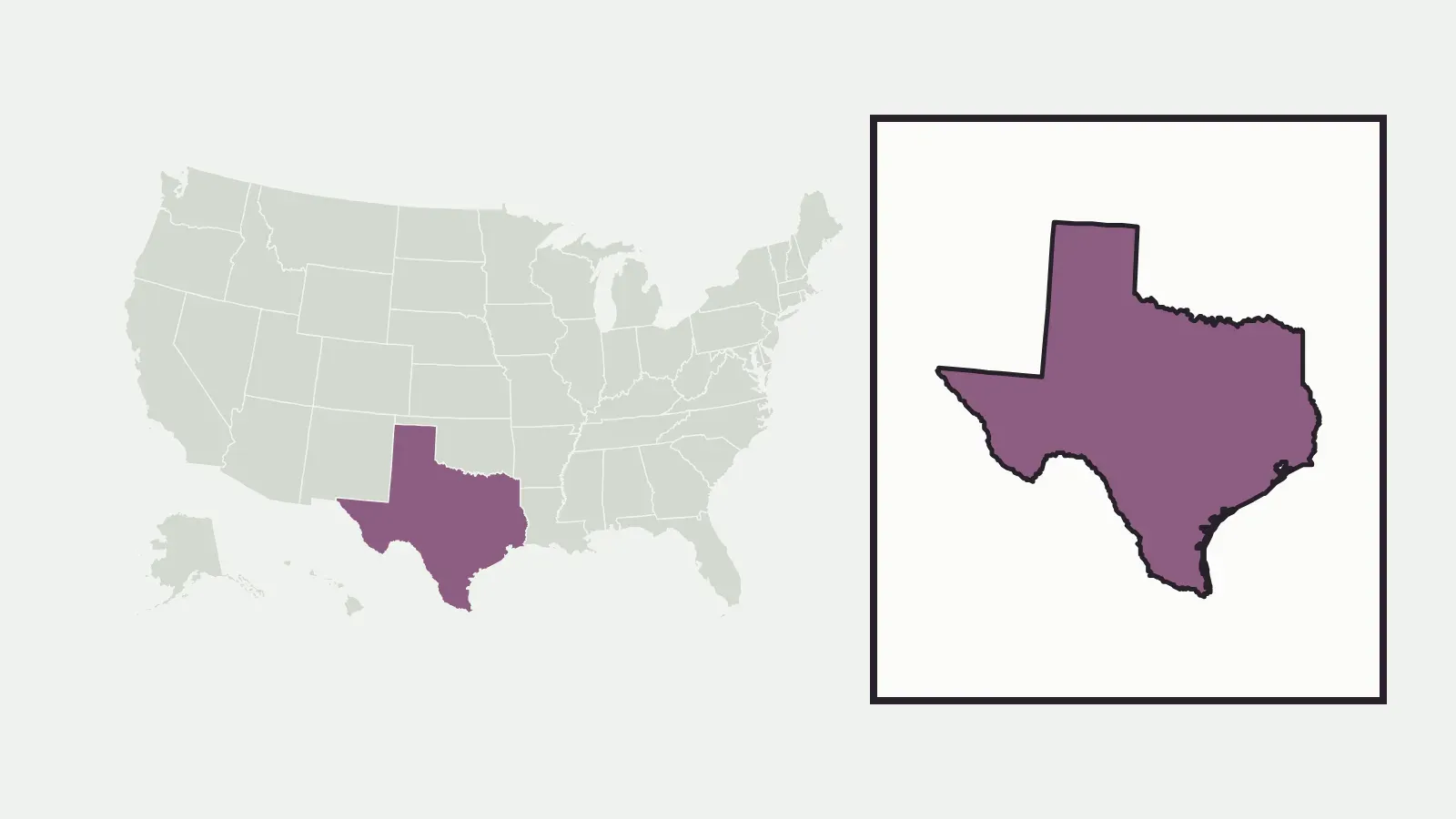
Texas does not license general contractors. The state does license electricians and air conditioning and refrigeration contractors through the Texas Department of Licensing and Regulation (TDLR), and plumbers through the State Board of Plumbing Examiners. For homestead improvements over $5,000, the contractor must deposit your payments in a construction account. Building codes come from your city, and EPA runs the lead-safe rule.
Texas at a glance
The 97.1 number, in plain terms
BEA's 2024 regional price parity for Texas is 97.1, against 100 for the nation, which puts the state in the lower tier on this site's map (92 to 97.9).
That index is a household price level. Rent is part of it, and a remodeler's bid is not. A state this large has several separate labor markets, so a statewide figure will not tell you what a shower rebuild costs near Lubbock or near Houston. Ask three firms for written bids, then compare them in the quote check. Metro-area wages for carpenters, electricians and plumbers sit in BLS's OEWS data at data.bls.gov/oes.
Who may do the work
A legal-aid guide from the Texas Legal Services Center says Texas does not require general contractors to be licensed or bonded. The state once had a Residential Construction Commission, and the Sunset Advisory Commission's page says it was abolished when its act expired on September 1, 2009.
Some trades are licensed. TDLR's license search covers electricians and air conditioning and refrigeration contractors. The State Board of Plumbing Examiners licenses plumbing across the state and has its own public search. If your remodel moves a drain, a panel or a duct run, ask the person doing it for a license number and check it.
- Ask your city or county whether it registers or licenses contractors. Some do, and a current local license is worth confirming.
- Ask for proof of insurance sent by the insurer.
- Check the contractor's name and address against what appears on the contract.
For questions to put on every bid, use the contractor-hiring guide.
The contract, the lien and the payments
We found no single home-improvement contract statute for Texas in the sources we read, but property law adds several requirements on residential construction contracts.
- Before you sign, the original contractor must give you a disclosure statement (Property Code 53.255).
- Before construction begins, the contractor must give you a written list of subcontractors and suppliers by name, address and phone number, and an updated list within 15 days of any change (53.256).
- For homestead improvements over $5,000, the contractor must deposit your payments in a construction account at a financial institution. The Attorney General says to ask for written verification.
- A contract on your homestead needs a specific lien warning. Without it, the contractor's lien may fail.
- Contracts signed in your home carry a written notice that you may cancel until midnight of the third business day.
Permits and code: it starts with your city
Texas does not run one residential building code for the whole state. Under Local Government Code 214.212, the International Residential Code, in the version in effect on May 1, 2012, is adopted as a municipal residential building code, and it covers alteration, remodeling and repair. The statute lets cities review and consider later editions of the code through local amendments adopted after a public hearing. The state library guide adds that state law sets a minimum residential code for all cities and some unincorporated areas.
A recent headline may confuse you. TDLR adopted the 2024 IRC, mechanical code and fuel gas code effective September 1, 2026, but those rules apply to its air conditioning and refrigeration contractor program, not to every interior remodel. Your building department decides what permit your project needs and which edition it enforces; the permit guide explains how to ask.
Lead-safe work in older homes
The lead renovation rule is EPA's to run in Texas. In a home built before 1978, a paid crew that disturbs more than six square feet of paint in a room needs to be an EPA-certified firm. The older-home guide explains what lead-safe work looks like and what to ask a bidder.
Where to check and complain
- Look up any electrician or air conditioning contractor at TDLR, and any plumber at the State Board of Plumbing Examiners.
- For TDLR matters, call (512) 463-6599 or (800) 803-9202, or use its Complaints and Enforcement page.
- For plumbing, use the board's File a Complaint page.
- For suspected contractor fraud, read the Attorney General's home improvement scam guidance in the sources below, and ask a lawyer about liens before you withhold payment.
Common questions
Do I need a license to hire a remodeler in Texas?
You do not need to look for a general contractor license, because Texas does not issue one. Electricians, air conditioning contractors and plumbers are state-licensed, so verify those.
Where should my payments go on a homestead remodel?
For homestead improvements over $5,000 the contractor is required by law to deposit your payments in a construction account at a financial institution. Ask for written verification.
Does Texas have a statewide residential building code?
Not in the usual sense. State law adopts the International Residential Code, in its May 1, 2012 version, as a municipal code, and cities may review later editions and adopt local amendments. Ask your city which one it enforces.
Can I cancel a contract I signed at home?
A contract made in your home should carry a notice that you can cancel until midnight of the third business day. Read the notice and keep proof of when you sent it.
Sources
- TexasLawHelp (Texas Legal Services Center): Hiring a Contractor
- Texas Attorney General: How to avoid home improvement scams
- Texas Property Code 53.255, disclosure statement (texas.public.law)
- Texas Property Code 53.256, list of subcontractors (texas.public.law)
- Texas Local Government Code 214.212 (texas.public.law)
- Texas State Library: Building codes in Texas
- TDLR: rulemaking, commission adopts rules (2024 codes, September 1, 2026)
- Texas Department of Licensing and Regulation
- Texas State Board of Plumbing Examiners
- Texas Sunset Advisory Commission: Texas Residential Construction Commission
- EPA: Lead Renovation, Repair and Painting Program
- FRED: Regional Price Parities, All Items for Texas (BEA)
Checked November 19, 2026. The Texas Legislature's statute site did not load, so the Property Code and Local Government Code text comes from a public copy of the statutes. We did not confirm the dollar threshold for the Property Code disclosure statement, and the absence of a general license rests on a legal-aid guide and the abolition of the old commission. BEA's next release is December 10, 2026. A second check on November 20, 2026 read the main official pages again; it could not confirm outright that there is no general state license.
Keep reading
-

Planning guide
Choosing a contractor
Scam signs, license and insurance checks, comparable written bids, contract basics and what to do in a dispute.
-

Planning guide
Change orders and payment schedules
Put every change in writing, understand allowances and contingency, and pay in a way that protects you.
-

Planning guide
Permits for interior remodels
What usually needs a permit, what does not, a call script for your building department, and the inspection order.